
Introduction
High quality fly ash for concrete is becoming an essential material in modern construction due to its strength, durability, and environmental benefits.
The construction industry is rapidly shifting toward sustainable and cost-effective materials. One such material gaining widespread attention is high-quality fly ash, a by-product of coal combustion used as a supplementary cementitious material in concrete production. Its ability to enhance durability, reduce costs, and improve environmental performance makes it a preferred choice for modern infrastructure projects.
High-quality fly ash is not just a waste product; it plays a crucial role in improving concrete performance while reducing the construction industry’s carbon footprint. When properly processed and used in the right proportion, it significantly improves both the mechanical and chemical properties of concrete.
What is Fly Ash in Concrete Production?
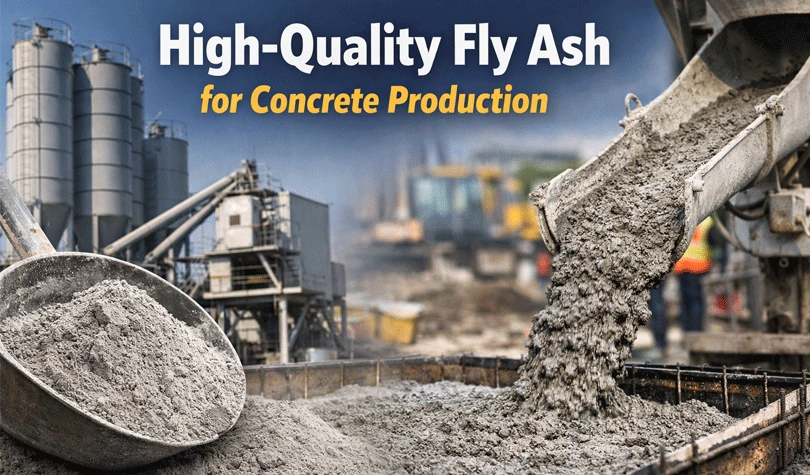
Fly ash is a fine, powdery material generated during coal combustion in thermal power plants. It contains silica, alumina, and iron oxides, which react chemically with calcium hydroxide in cement to form additional cementitious compounds. This reaction improves the strength and durability of concrete over time.
Because of its pozzolanic nature, fly ash is widely used as a partial replacement for Portland cement, typically up to about 30% of the cementitious content in concrete mixtures.
Why High Quality Fly Ash for Concrete Matters in Construction
1. Improved Strength and Durability
Fly ash reacts with cement hydration products to form additional calcium silicate hydrate, thereby increasing long-term compressive strength and improving the durability of structures.
Concrete with fly ash becomes denser, reducing permeability and protecting structures from water penetration and chemical attack.
2. Better Workability and Finishing
The spherical shape of fly ash particles improves the flowability of concrete mixes, making them easier to place and finish.
This enhanced workability also reduces water demand and improves pumping efficiency in construction projects.
3. Reduced Heat of Hydration
High-quality fly ash significantly lowers the heat generated during cement hydration. This reduces the risk of thermal cracking in large structures such as dams, foundations, and bridges.
This property makes fly ash ideal for mass concreting applications where temperature control is critical.
4. Increased Resistance to Chemical Attack
Concrete incorporating fly ash shows improved resistance to sulfate attack, alkali-silica reaction, and chloride penetration.
These characteristics extend the service life of structures exposed to harsh environments such as marine areas, industrial zones, and wastewater facilities.
5. Environmental Sustainability
Using fly ash reduces the need for cement production, which is a major contributor to global carbon emissions.
It also helps recycle industrial waste and reduces landfill usage, making it an environmentally responsible construction solution.
6. Cost-Effective Construction Material
Fly ash is typically less expensive than Portland cement, and replacing a portion of cement can reduce overall concrete costs by up to 10–15%.
This makes it especially beneficial for large-scale infrastructure projects such as highways, bridges, and commercial buildings.
Applications of High-Quality Fly Ash Concrete
High-quality fly ash concrete is widely used in:
High-rise buildings
Road and highway construction
Dams and retaining walls
Bridges and marine structures
Industrial flooring
Precast concrete products
Its ability to enhance long-term performance makes it ideal for both structural and infrastructure applications.
Importance of Quality in Fly Ash Selection
Not all fly ash is suitable for construction. High-quality fly ash should have:
Low carbon content
Proper fineness
Consistent chemical composition
Controlled moisture levels
Using inferior fly ash can delay strength development or reduce concrete durability. Therefore, sourcing fly ash from reliable suppliers and conducting proper testing are essential to ensure performance and structural safety.
Future of Fly Ash in Sustainable Construction
As the construction industry moves toward greener practices, the demand for fly ash in concrete production continues to grow. Researchers and engineers are exploring advanced technologies such as geopolymer concrete, which uses fly ash as a primary binder to reduce cement use and carbon emissions.
As infrastructure development and sustainability goals worldwide increase, fly ash is expected to play a central role in future construction materials.
Conclusion
High-quality fly ash is transforming the concrete industry by offering improved strength, durability, sustainability, and cost savings. Its use not only enhances concrete performance but also supports eco-friendly construction practices.
For builders, contractors, and developers seeking long-lasting and sustainable construction materials, incorporating high-quality fly ash into concrete production is no longer an option—it is a necessity.
Contact the Best Fly Ash Supplier in Tamil Nadu
Looking for a dependable fly ash supplier in India for your next project?
📍 Location: Thoothukudi, Tamil Nadu
📞 Phone: +91 99625 70222
📧 Email: exports@enviropozzo.com
Follow us for more updates: Facebook
👉 Contact us today for bulk fly ash supply, pricing, and technical support.