
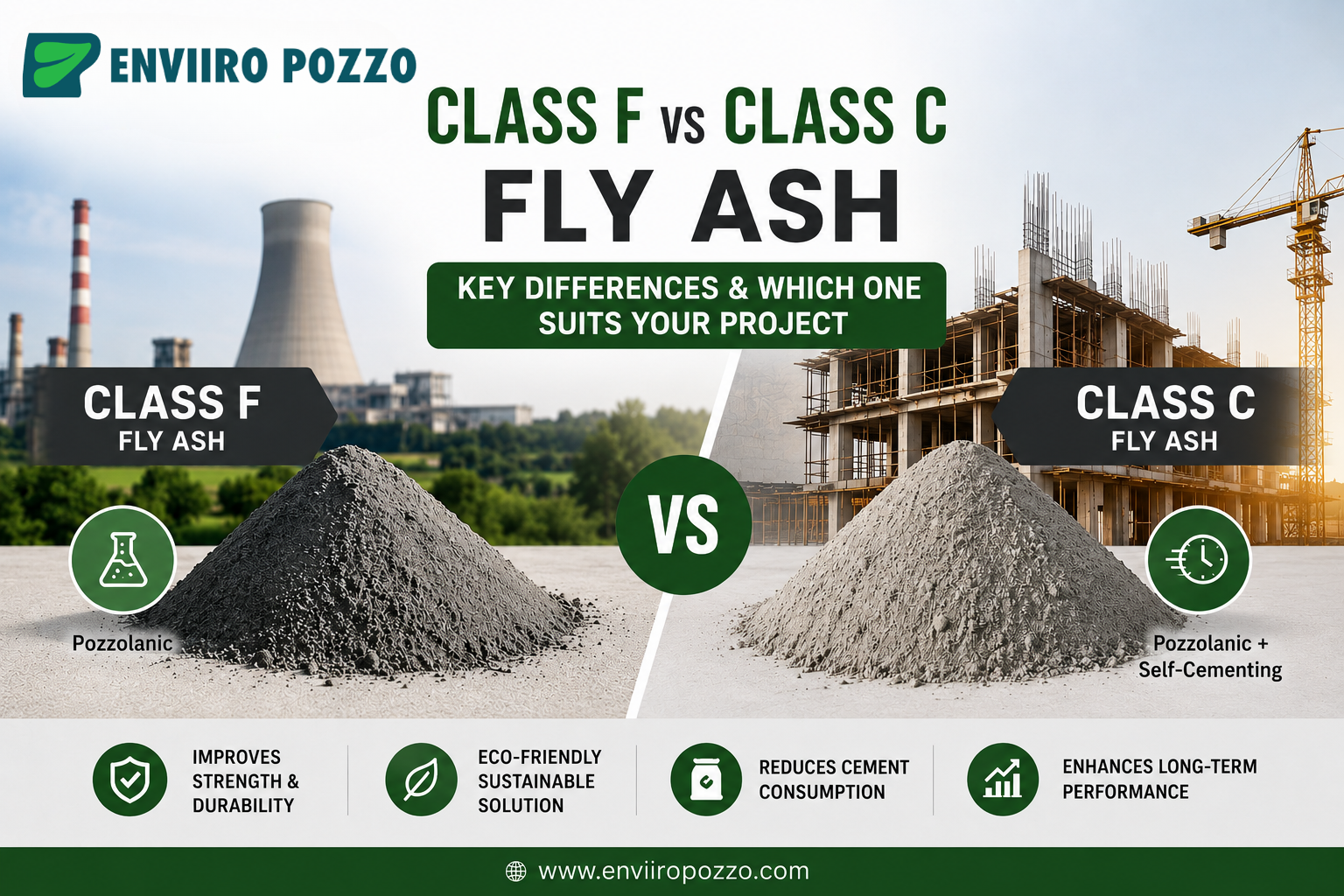
Class F vs Class C Fly Ash: Key Differences & Which One Suits Your Project?
Choosing the right construction material plays a significant role in the strength, durability, and long-term performance of any project. Fly ash — a widely used supplementary cementitious material — enhances concrete quality while reducing environmental impact. But not all fly ash is the same: Class F and Class C fly ash differ in composition, properties, and ideal applications. This guide breaks down the differences so you can choose the right grade for your project.
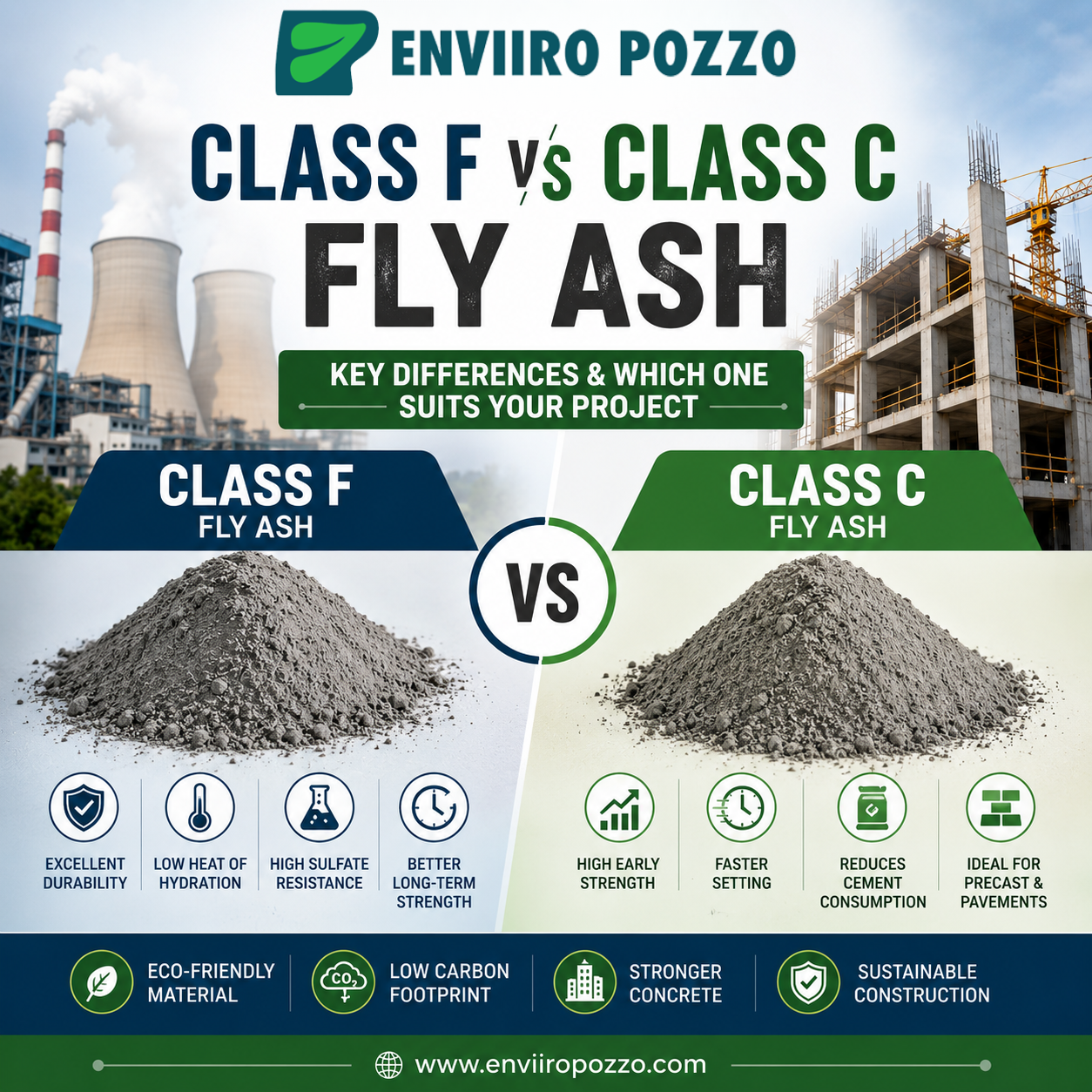
What Is Fly Ash?
Fly ash is a finely divided mineral residue collected from the exhaust gases of coal-fired thermal power plants. Rather than being discarded as industrial waste, it is processed and used as a valuable ingredient in concrete, cement manufacturing, road construction, precast products, and soil stabilization.
Its microscopic spherical particles improve concrete workability, reduce permeability, increase strength over time, and support sustainable construction practices.
What Is Class F Fly Ash?
Produced from burning anthracite and bituminous coal, Class F fly ash offers reliable, long-term performance. It contains a lower amount of calcium oxide (typically below 10%) and has strong pozzolanic properties.
Unlike cement, Class F fly ash needs calcium hydroxide — released during cement hydration — to form additional cementitious compounds. This reaction improves concrete density and long-term strength.
Key Characteristics of Class F Fly Ash
- Low calcium content
- High silica and alumina composition
- Excellent sulfate resistance
- Reduces alkali-silica reaction (ASR)
- Generates lower heat during hydration
- Improves long-term durability
What Is Class C Fly Ash?
Class C fly ash is obtained from burning lignite or sub-bituminous coal. It contains significantly higher calcium content (typically above 20%), making it both pozzolanic and self-cementing.
Unlike Class F, Class C fly ash can harden with water without relying entirely on cement hydration products — making it well suited for applications that require faster strength gain.
Key Characteristics of Class C Fly Ash
- High calcium content
- Self-cementing properties
- Faster strength development
- Higher early-age strength
- Suitable for cold weather concreting
- Reduces cement consumption
Class F vs Class C Fly Ash: Major Differences
| Feature | Class F Fly Ash | Class C Fly Ash |
|---|---|---|
| Source | Bituminous & Anthracite Coal | Lignite & Sub-bituminous Coal |
| Calcium Content | Less than 10% | More than 20% |
| Cementing Ability | Pozzolanic only | Pozzolanic + Self-cementing |
| Early Strength | Moderate | High |
| Long-Term Strength | Excellent | Very Good |
| Sulfate Resistance | Excellent | Moderate |
| Heat of Hydration | Low | Higher |
| Best Applications | Large infrastructure & marine projects | Precast, pavements & rapid construction |
Where Is Class F Fly Ash Preferred?
Class F fly ash is widely recommended for projects where durability is the primary concern. It performs exceptionally well in:
- High-rise buildings
- Dams and reservoirs
- Marine structures
- Bridges
- Foundations
- Water retaining structures
- Industrial flooring
- Mass concrete construction
Its low heat generation minimizes thermal cracking in large concrete pours, making it ideal for heavy civil engineering projects.
Where Is Class C Fly Ash Preferred?
Class C fly ash is suitable when projects demand faster construction schedules and higher early strength. Common applications include:
- Highway pavements
- Airport runways
- Precast concrete products
- Soil stabilization
- Road construction
- Rapid repair works
- Concrete blocks and pavers
Its self-cementing nature helps reduce curing time and speeds up project completion.
Which Fly Ash Should You Choose?
The right option depends on the specific needs of your project.
Choose Class F Fly Ash if your project prioritizes:
- Long service life
- Enhanced durability
- Sulfate resistance
- Low permeability
- Reduced cracking
- Large structural concrete works
Choose Class C Fly Ash if your project requires:
- Faster setting
- Early strength gain
- Short construction timelines
- Precast manufacturing
- Pavement construction
Many modern projects also evaluate local environmental conditions, structural requirements, and design specifications before selecting the appropriate fly ash grade.
Benefits of Using High-Quality Fly Ash
Regardless of the class selected, premium-quality fly ash offers numerous advantages:
- Improves concrete workability
- Enhances compressive strength
- Reduces cement consumption
- Minimizes shrinkage cracks
- Lowers heat of hydration
- Increases resistance to aggressive chemicals
- Produces denser, more durable concrete
- Supports environmentally sustainable construction
Using certified fly ash also helps reduce the carbon footprint associated with cement production.
Why Choose Enviiro Pozzo?
At Enviiro Pozzo, we supply premium-quality processed fly ash that meets stringent industry standards for consistency and performance. Our products are trusted across infrastructure, commercial, industrial, and residential construction projects. We focus on delivering:
- Consistent product quality
- Reliable bulk supply
- Strict quality testing
- Timely delivery
- Technical support for project requirements
- Sustainable construction solutions
Conclusion
Understanding the difference between Class F and Class C fly ash is essential for selecting the right material for your construction project. While Class F offers superior durability and long-term performance, Class C provides faster strength development and quicker construction cycles.
Select the right option based on your project's structural needs, exposure conditions, and desired performance. By sourcing high-quality fly ash from a trusted supplier like Enviiro Pozzo, you can enhance concrete performance while supporting sustainable construction practices.
Need Fly Ash for Your Project?
Get reliable Class F or Class C fly ash supply, backed by technical support and consistent quality.
Contact Enviiro Pozzo Today