
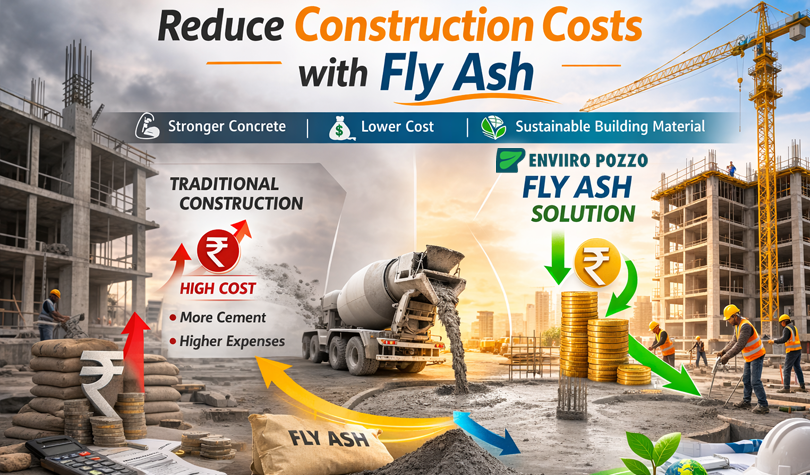
How Fly Ash Reduces the Cost of Construction Projects
Managing construction costs is one of the biggest challenges for builders, contractors, and infrastructure developers. Every project requires materials that provide strength, durability, and long-term performance while staying within budget. One material that plays an important role in reducing construction costs is fly ash.
Fly ash is widely used in concrete production as a supplementary material that partially replaces cement. This simple replacement can lead to significant savings while improving concrete quality. Today, many engineers and construction companies prefer fly ash because it offers both economic and technical advantages.
From residential buildings to large infrastructure projects, fly ash helps reduce material costs, improve structural performance, and support environmentally responsible construction practices.
Understanding Fly Ash in Construction
Fly ash is a fine mineral powder produced during the combustion of coal in thermal power plants. Instead of being treated as industrial waste, it is collected, processed, and used in construction materials.
When fly ash is blended with cement and water, it reacts chemically with the mixture’s compounds. This reaction helps form additional bonding materials within the concrete, resulting in stronger, more durable structures over time.
Because of these properties, fly ash has become an important component in modern concrete technology.
Lower Cement Requirement
One of the most significant ways fly ash reduces construction costs is by lowering the amount of cement needed in concrete.
Cement production is expensive because it requires high energy consumption and complex manufacturing processes. By replacing a portion of cement with fly ash, builders can reduce the total quantity of cement used in a project.
In many construction applications, fly ash can replace a considerable percentage of cement while still maintaining the required strength and structural performance. This substitution helps contractors control material costs without compromising concrete quality.
For large projects such as highways, commercial buildings, and industrial facilities, even a small reduction in cement use can yield substantial cost savings.
Improved Concrete Workability
Fly ash particles have a smooth, round shape, which allows them to flow more easily within a concrete mixture. This improves the workability of concrete, making it easier to mix, transport, and place during construction.
Better workability reduces the effort required for concrete placement and finishing. As a result, labor efficiency improves, and construction tasks can be completed faster.
Additionally, concrete that is easier to handle often requires fewer chemical additives. Reducing the use of these additives can further decrease overall construction costs.
Increased Strength and Durability
Another important advantage of fly ash is its ability to enhance the long-term strength of concrete structures.
While concrete containing fly ash may gain strength gradually during curing, the final strength can be higher than that of conventional concrete mixes. This improvement occurs because the chemical reaction of fly ash forms additional binding compounds that strengthen the concrete’s internal structure.
Stronger concrete leads to more durable buildings, bridges, and roads. Durable structures require less maintenance and fewer repairs over time, which reduces long-term expenses for building owners and infrastructure developers.
Reduced Heat Generation in Concrete
During curing, cement produces heat as part of its chemical reaction. In large concrete structures, excessive heat buildup can cause internal stress and cracking.
Fly ash helps control this heat generation by slowing down the reaction rate in the concrete mixture. Lower heat levels reduce the risk of cracks and structural damage.
Preventing cracks during construction helps avoid costly repairs and ensures the building’s structural integrity from the beginning.
Lower Maintenance Costs
Buildings and infrastructure projects constructed with durable materials require less maintenance throughout their lifespan.
Fly ash improves concrete’s resistance to environmental factors, such as moisture penetration, chemical exposure, and weathering. This increased resistance helps protect structures from early deterioration.
As a result, property owners spend less money on repairs, strengthening, and renovation work over time. This makes fly ash not only a cost-saving material during construction but also a long-term economic advantage.
Environmental and Sustainability Benefits
Using fly ash in construction also supports environmentally responsible building practices.
Since fly ash is a byproduct from industrial processes, utilizing it in concrete reduces the demand for newly manufactured cement. This helps lower energy consumption and reduces greenhouse gas emissions associated with cement production.
Many construction companies today focus on sustainable building methods, and incorporating fly ash into concrete is one practical way to achieve those goals while also reducing costs.
Suitable for Large-Scale Construction Projects
Fly ash is widely used in major infrastructure projects, including highways, bridges, ports, airports, and industrial buildings. These projects require large quantities of concrete, making cost efficiency a major priority.
Because fly ash improves performance while lowering material costs, it has become a preferred choice for engineers working on large-scale construction projects.
Its consistent performance and economic benefits make it an ideal material for modern construction practices.
Fly ash has become an essential material in today’s construction industry due to its ability to reduce costs while improving concrete quality. By reducing cement use, improving workability, enhancing durability, and minimizing maintenance costs, fly ash offers multiple financial advantages for construction projects.
Incorporating fly ash into concrete mixes allows builders and developers to achieve stronger, longer-lasting structures while maintaining better control over project budgets.
As construction continues to evolve toward more efficient and sustainable methods, fly ash will remain a valuable solution for reducing costs and improving overall building performance.
Partner With Enviiro Pozzo — Your Bulk Fly Ash Supplier
For construction companies aiming to boost quality, cut costs, and achieve sustainability goals, partnering with a reliable bulk fly ash supplier is a strategic move. Enviiro Pozzo combines quality assurance, consistent supply, competitive pricing, and global capabilities — making it a go-to choice for construction professionals.
From ready-mix concrete to blended cement production and large-scale infrastructure, Enviiro Pozzo’s bulk fly ash solutions help you build better, faster, and greener.
Contact Enviiro Pozzo today to get a tailored bulk supply plan and quotationfor your next construction project